
Greyhound Recovery After a Race: The First Hour
Quick Summary
"What you do in the sixty minutes after a greyhound comes off the track shapes how it moves the next morning. A practical order of operations — cooling, walking, compression and rest — for owners and trainers."
The hour after a race matters more than any single session in the week before it. A racing greyhound empties itself over roughly thirty seconds of near-maximal effort, and everything that follows — how quickly it cools, how soon the legs stop pooling blood, whether it stands quietly or paces the trailer — decides how it moves the next morning. The good news is that the routine is simple and largely unchanged from yard to yard. What varies is the order, and getting the order right is most of the work.
What should you do in the first ten minutes after a race?
Walk the dog, and keep walking it. The single most useful thing in the first ten minutes is unhurried movement on a loose lead, because the greyhound's circulation depends heavily on the muscles themselves acting as a pump. A dog that is crated immediately after a race loses that pump at exactly the moment its legs most need it, which is why so many stiffen up in the box rather than on the track. Ten to fifteen minutes of steady walking on a forgiving surface — grass rather than concrete — lets the heart rate come down gradually and gives you a close look at how the dog is loading each leg while it is still warm. Offer small amounts of water during this walk rather than letting the dog drink its fill at once. Then, and only then, think about standing it still.
Why does a greyhound cool down differently from other dogs?
Because it has almost nothing to insulate it, a greyhound both sheds and loses heat faster than a thicker-coated breed. Very little body fat and a fine single coat mean the dog that was overheating on the track can be genuinely cold twenty minutes later, particularly on an Irish or British evening with any wind in it. This is the reason the classic mistake in greyhound recovery is not under-cooling but over-cooling: hosing a dog down and then leaving it standing wet in a draught undoes the benefit and leaves the muscles chilled and tight. Manage the two ends of the swing deliberately. Bring the temperature down while the dog is still warm and moving, then get it dry and covered before it drops too far — a fleece-lined or waterproof jacket is not a luxury for a greyhound standing at a track in October.
Where does a compression suit fit into the routine?
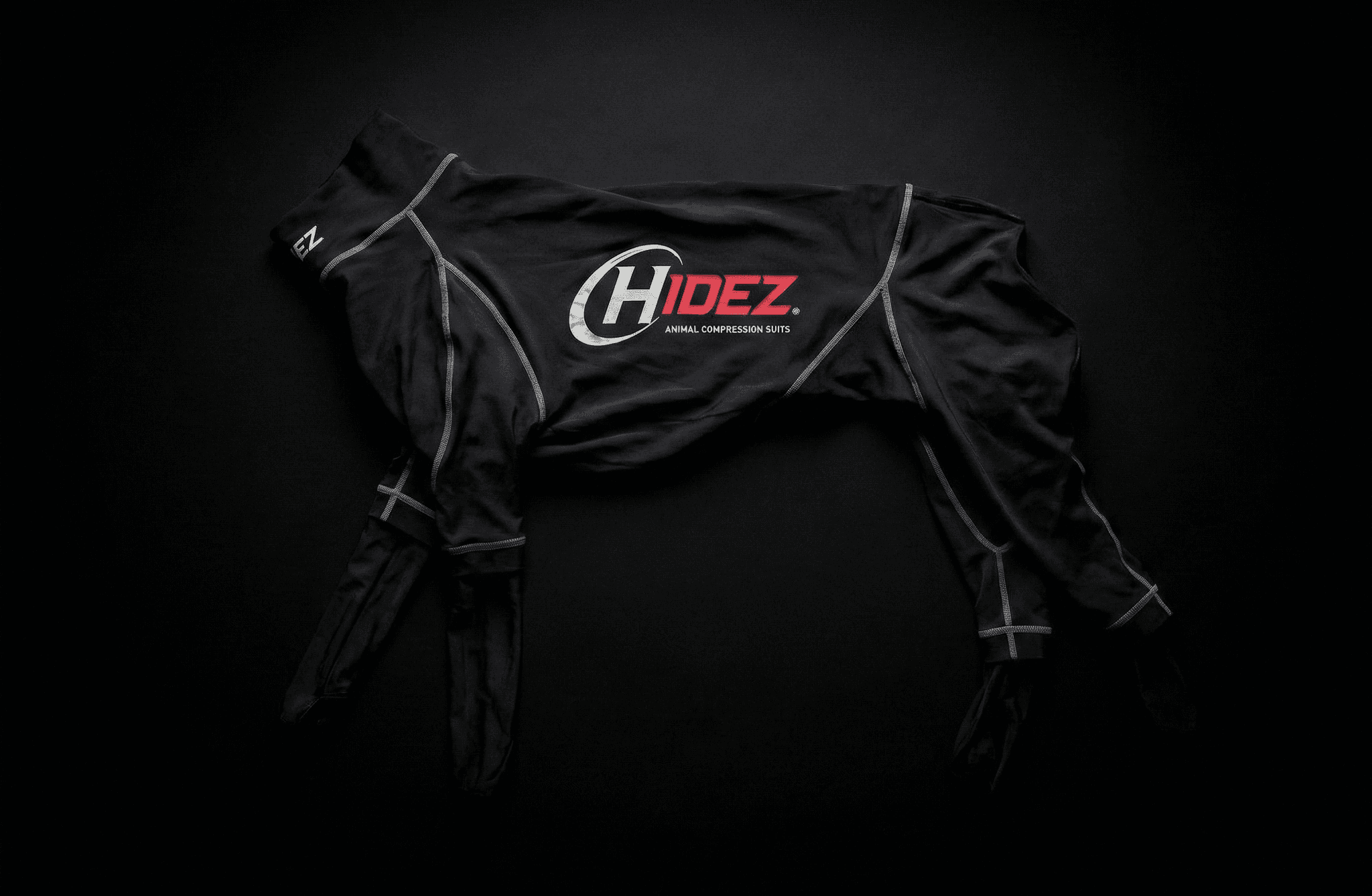
After the walk, once the dog is dry and settled — that is the window a compression suit is designed for. Graduated compression applies engineered, varied pressure across the muscle groups, which supports the venous and lymphatic return that a standing, resting dog no longer generates through movement. In practical terms it takes over some of the job the walking was doing, at the point when you need the dog to stand still and rest. The Hidez greyhound suit is cut for the sighthound frame specifically, which matters more than it sounds: a suit that gapes over the loin or bunches at the shoulder is not applying graduated pressure at all, it is just fabric. The steady, even pressure has a second effect worth as much as the first — the deep-pressure or "swaddle" response that helps a wound-up dog settle. A greyhound that stands quietly in the trailer instead of pacing arrives home with something left in the tank.
How long should a greyhound wear a compression suit after racing?
Four to twelve hours is the usual range, covering the rest period and the journey home. The fabric is breathable and moisture-wicking, so extended wear is well within what the garment is built for, and many trainers simply leave the suit on from the track until the dog is settled in its kennel. Two things are worth watching regardless of duration. First, the dog must be dry when the suit goes on — compression over a damp coat traps moisture against the skin and cools rather than warms. Second, check the dog rather than the clock, especially in warm weather: a greyhound that is panting persistently under the suit is telling you something, and the answer is to take it off and reassess. If anything about the dog's condition concerns you — heat, lameness, a leg that fills and stays filled, distress that does not settle — that is a conversation with your vet, not a question for a garment.
When does ice belong in the routine, and when does it not?
Targeted cooling is for the warm dog in the first stretch after exertion, not for the cold one hours later. If you are using cooling, use it while the dog is still carrying race heat and while you can watch it, and pair it with the movement and drying described above. The Ice Greyhound Suit exists for exactly this window: fourteen ice pockets distributed across a compression suit, so the cooling is placed over the muscle groups that did the work rather than applied indiscriminately with a hose. What it should not become is a default applied to every dog on every night regardless of conditions. On a cold evening, a hard-run greyhound usually needs drying, covering and quiet far more than it needs further cooling. Read the weather and the dog.
How do you get the fit right?
Measure before you buy, and measure the dog you have rather than the dog you remember. Graduated compression only does its job when the garment sits close and even across the whole frame, so a size chosen from a rough guess is the most common reason a suit disappoints. Take the measurements set out in the Hidez sizing guide with a soft tape and, ideally, a second pair of hands, and contact support before ordering if your dog falls between sizes — racing greyhounds in particular change shape across a season. It is also worth fitting the suit at home once or twice before you first use it at a track. A dog meeting unfamiliar pressure for the first time in a strange, loud place has two new things to deal with instead of none.
The short version
Walk first, cool while warm, dry and cover before the dog chills, then use compression through the rest and the journey home. Keep the dog moving when it can move and support the circulation when it cannot, and let its behaviour the following morning tell you whether the routine is working. The full range cut for the sighthound frame — suits, ice compression, jackets and vests — is in the Hidez greyhound collection.